About the Project
The NFC Potentiostat is an ultra-compact, battery-free electrochemical diagnostic platform designed for point-of-care biosensing. Powered entirely through 13.56 MHz Near-Field Communication (NFC) energy harvesting from a smartphone, the system executes precision cyclic voltammetry, differential pulse voltammetry, and chronoamperometry with zero external wires or batteries. It combines custom 4-layer analog circuitry, an ARM Cortex-M33 microcontroller, and on-device Gemma 3 1B AI for instantaneous automated peak interpretation and hands-free voice control.
Prototype & Device Gallery · Click to Zoom
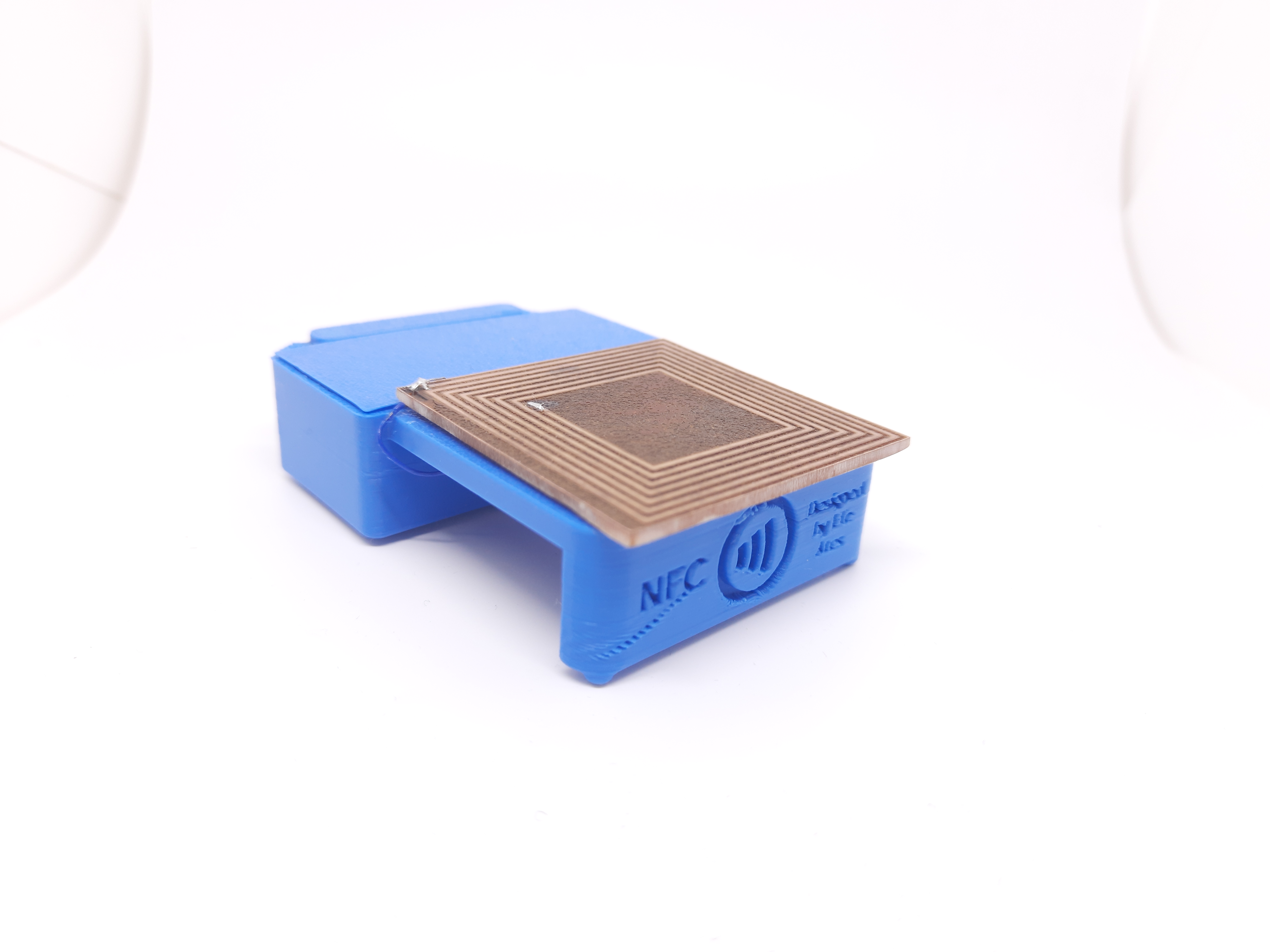
Final Assembled Potentiostat
Custom 3D-printed enclosure with magnetic MagSafe-compatible smartphone coupling.
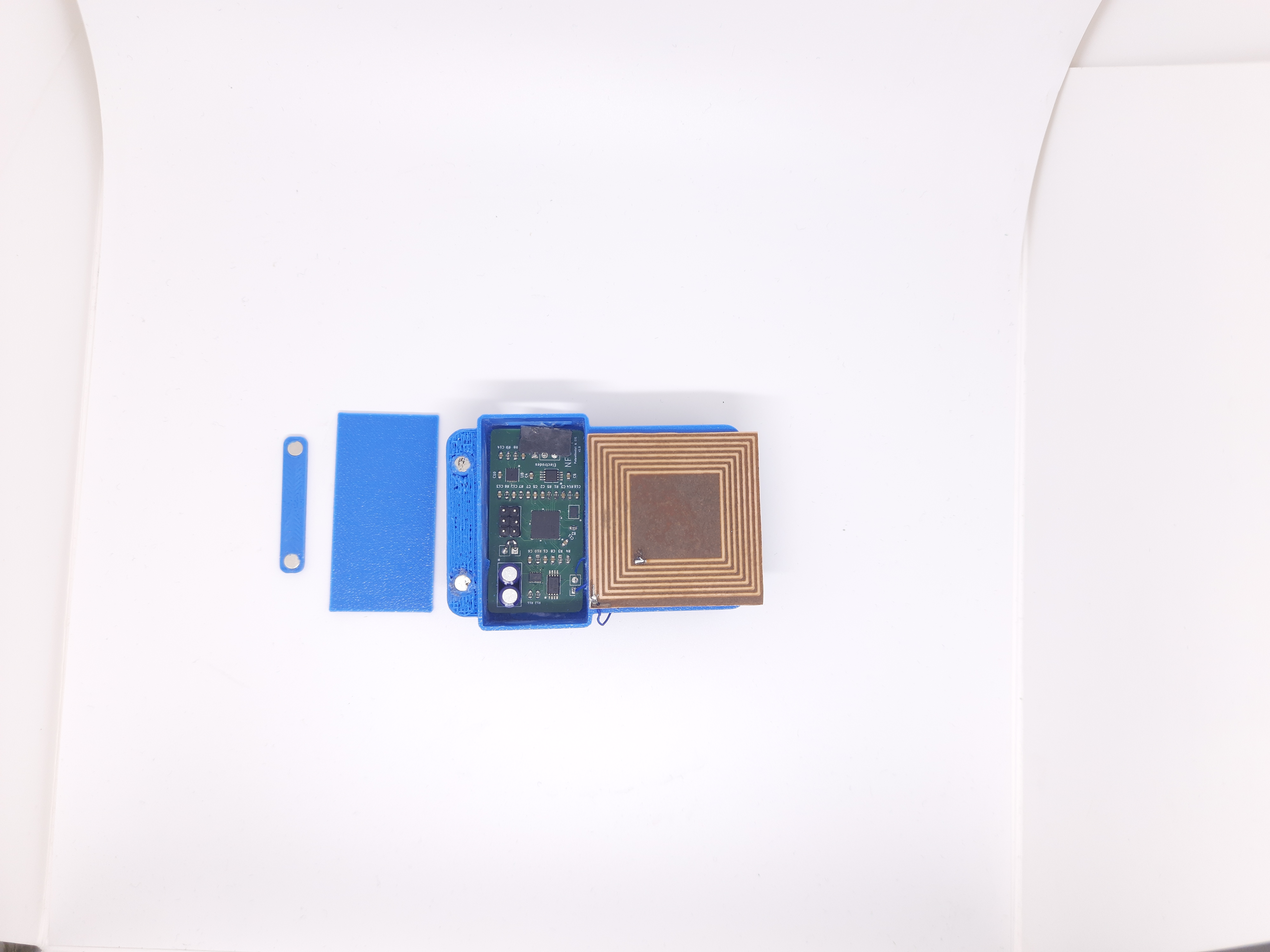
Exploded Assembly View
4-layer PCB, CNC-milled antenna coil, magnetic holder, and sensor chassis.
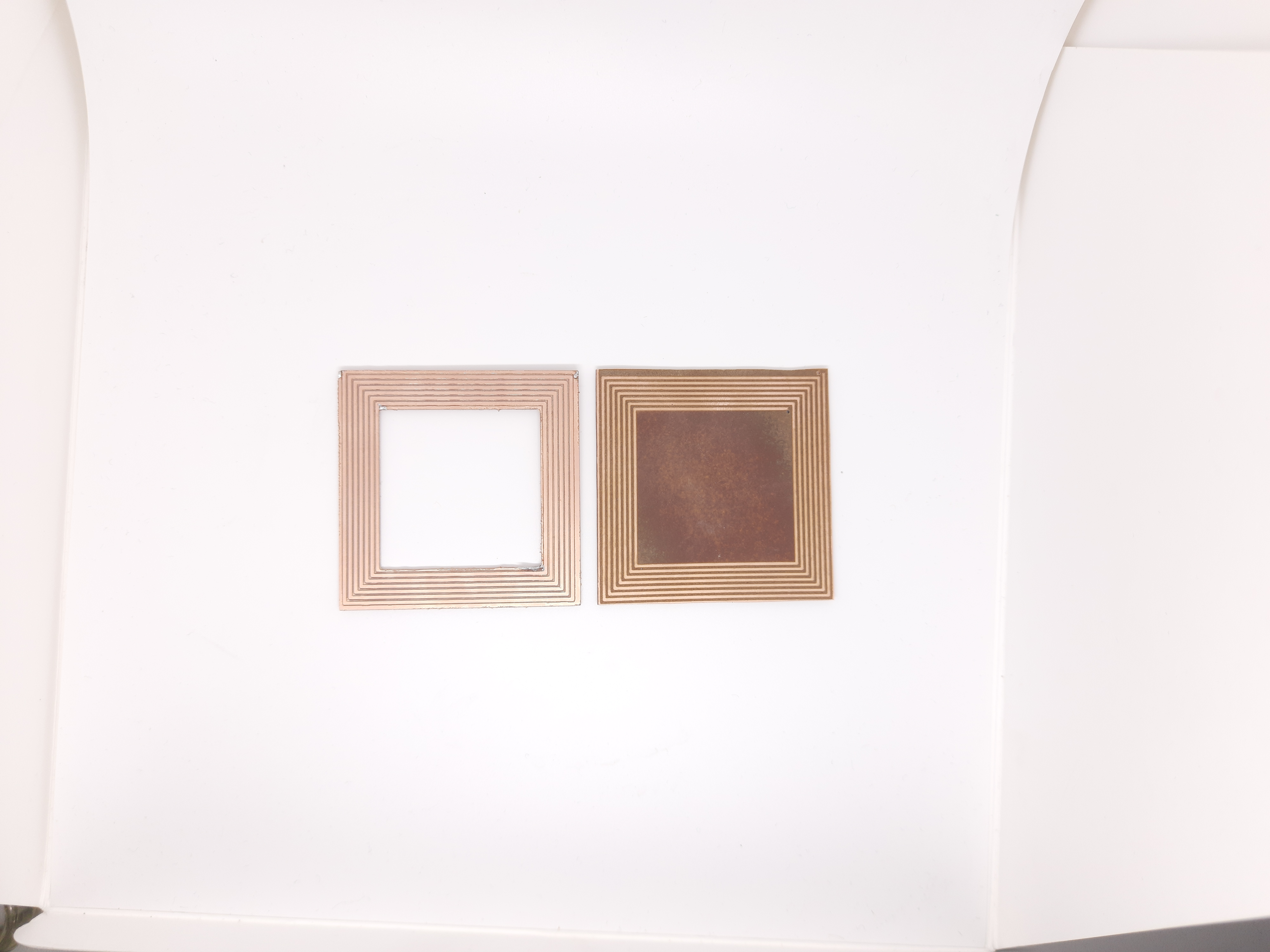
CNC-Milled NFC Antennas
13.56 MHz tuned planar spiral coils optimized for maximum energy harvesting efficiency.
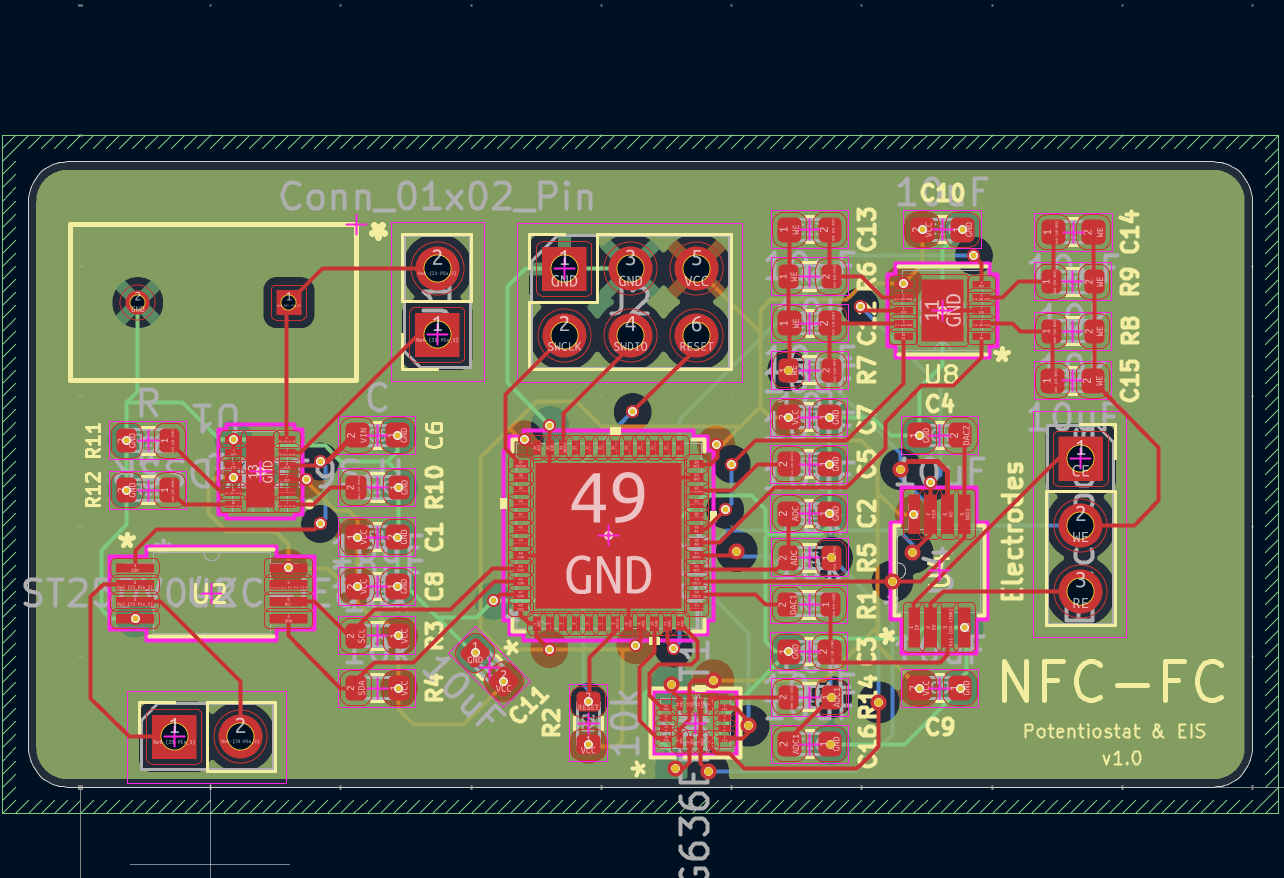
KiCad 4-Layer PCB Routing
Ultra-compact board layout minimizing stray capacitance for nanoampere precision.
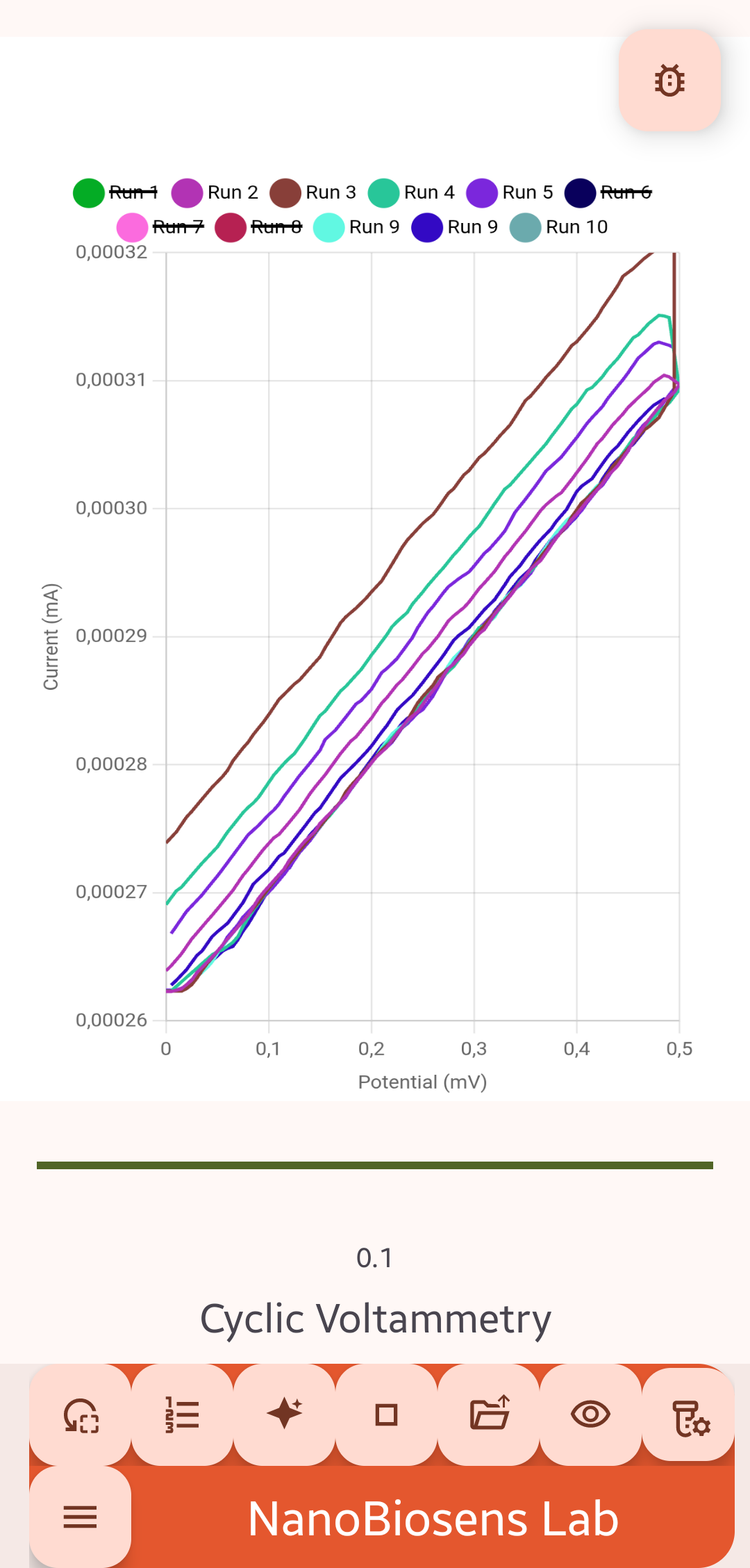
10-Run CV Repeatability Test
Experimental validation on Sensitify Go App showing 98.5% linearity across 10 scans.
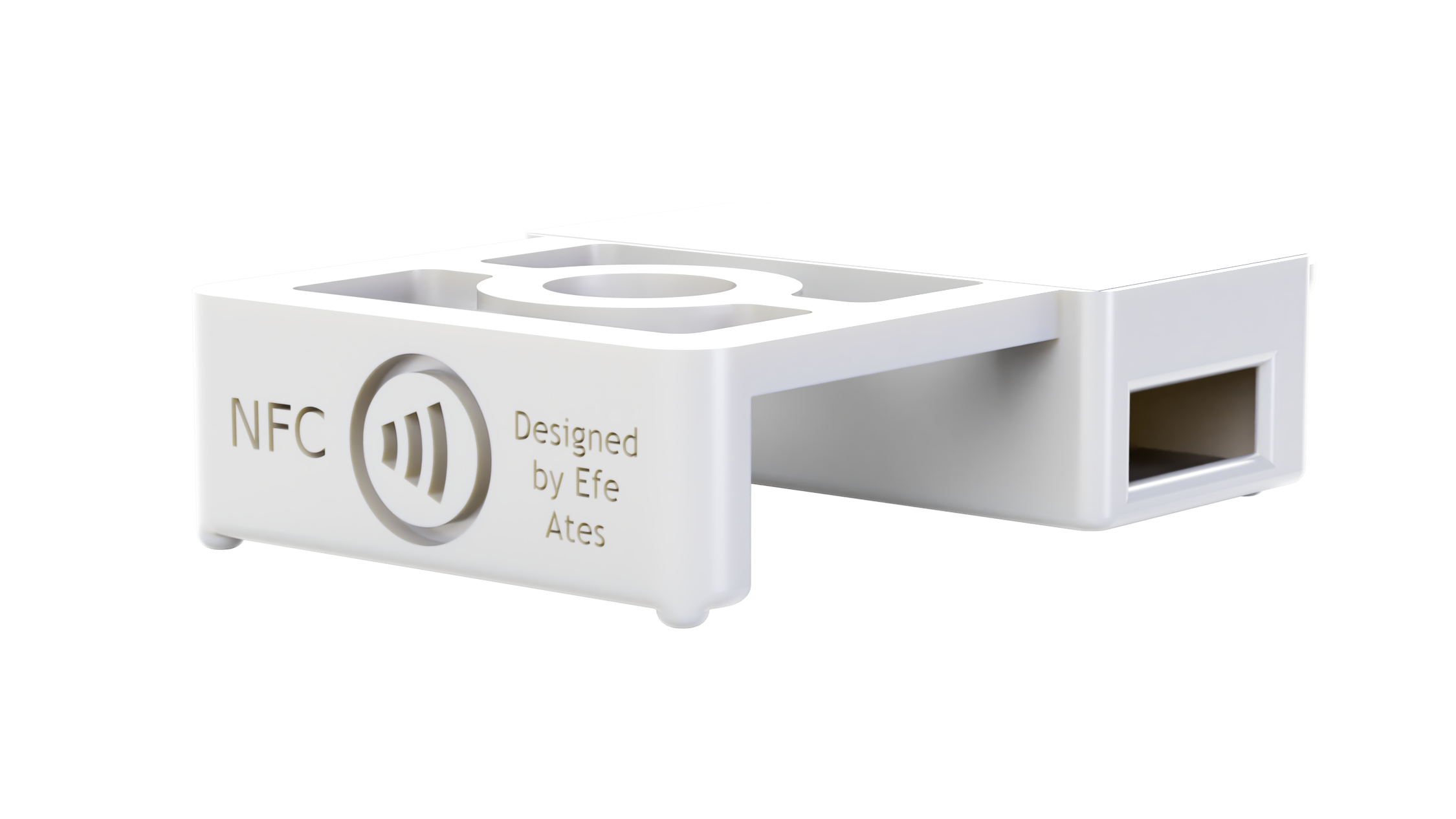
Fusion 360 Enclosure Model (v2)
Iterative 3D enclosure engineered for magnetic phone snap-alignment.
Live Electrochemical Potentiostat · Real-Time CV Engine
Potentiostat Sweep Parameters
The Challenge & Our Breakthrough
The Problem
Traditional benchtop potentiostats are bulky, cost thousands of dollars, and require mains power or bulky lithium batteries that degrade. This creates a severe barrier for field diagnostics, decentralized telemedicine, and resource-limited clinics.
The Wireless Solution
A credit-card sized potentiostat operating entirely on energy scavenged from a smartphone's 13.56 MHz RF field. By eliminating all batteries and cables, it achieves 100% maintenance-free electrochemical analysis with a single tap.
AI & Voice Intelligence
Integrated on-device Gemma 3 1B AI analyzes voltammograms in real time, detecting oxidation peaks and calculating analyte concentrations without cloud latency. Hands-free voice commands enable sterile operation in glove-wearing lab conditions.
Complete Ecosystem
Custom 4-layer PCB with STM32U545 + ST25DV dynamic tag, 3D-printed enclosure with magnetic alignment, CNC-milled NFC antennas, and the Sensitify Go Mobile companion app with live real-time graphing.
System Overview · Complete Signal Path
Technical Specifications · Custom 4-Layer PCB
Microcontroller
ARM Cortex-M33 ultra-low-power MCU with STOP2 deep-sleep mode, TrustZone security, and CMSIS-NN hardware neural accelerator.
NFC Tag IC
Dynamic ISO 15693 NFC tag with 256-byte Fast Transfer Mailbox, energy harvesting output pin (V_EH), and 1 MHz I²C interface.
ADC Precision
Successive approximation ADC with 128x hardware oversampling, yielding an effective resolution >16 bits for nanoampere currents.
Dual DAC Output
CH1 generates dynamic sweep ramp potential ($V_{CE}$), while CH2 sets precision virtual ground bias ($V_{ref}$) on the transimpedance amplifier.
Analog Front-End
Ultra-low noise CMOS dual op-amp. 10 kΩ feedback transimpedance amplifier supporting current dynamic ranges of ±165 μA.
Power Budget
100% powered from harvested RF field via TPS61094 buck-boost converter. Zero battery weight, zero hazardous chemical waste.
NFC Binary Protocol · ST25DV Fast Transfer Mailbox
ST25DV Mailbox Frame Structure
Binary packet serialized into ST25DV 256-byte dual-port static RAM mailbox with strict CRC-8 validation:
Select NFC Command
Cyclic Voltammetry Command
Initiates a full cyclic voltammetry potential sweep with programmable vertices.
On-Device AI · Gemma 3 1B & Voice Agent
Voice-Controlled Hands-Free Lab
Working in wet biochemical laboratories requires protective nitrile gloves, making touchscreen interaction inconvenient and prone to contamination. Sensitify Go NFC Edition integrates on-device voice recognition and Google’s lightweight Gemma 3 1B model to interpret voltammograms automatically.
"Identified reversible redox couple [Fe(CN)6]³⁻/⁴⁻. Anodic peak at +0.245V (142.6 µA), cathodic peak at +0.186V (-138.4 µA). Peak separation ΔEp = 59 mV indicates ideal Nernstian 1-electron transfer kinetics."
3D Enclosure Explorer · MagSafe Snap Architecture
Zero-Screw Snap-Fit Enclosure
Engineered specifically for point-of-care diagnostics. Incorporates an embedded MagSafe neodymium magnet ring channel for precise NFC antenna concentricity, slide-in guide rails for standard 3-pin Screen-Printed Electrodes (SPE), and integrated PCB clip locks.
15 Work Areas · 4 Engineering Disciplines
Electronic Design
- 13.56 MHz Planar Spiral Antenna Design & Tuning
- Low-Noise Analog Front-End (AD8606 TIA & Control Amp)
- Precision 4-Layer SMD SMT PCB Assembly & Soldering
- Embedded Firmware (DMA ADC Oversampling & Dual DAC Ramp)
Mechanical Design
- CNC FR4 Antenna Isolation Milling
- Parametric CAD Modeling in Autodesk Fusion 360
- FDM 3D Printing Prototyping (Initial Iterations)
- Magnetic MagSafe Snap Enclosure (5th Final Iteration)
Software & AI
- Mobile App Development (Sensitify Go NFC Edition)
- Gemma 3 1B Fine-Tuning & Automated Peak Analytics
- Voice Control & Text-to-Speech Lab Assistant
Testing & Validation
- 10 kΩ Dummy Resistor Multi-Run Calibration
- Potassium Ferricyanide $[Fe(CN)_6]^{3-/4-}$ Redox Tests
- Power Harvesting Efficiency & Voltage Droop Analysis
- Commercial Benchtop vs. NFC Potentiostat Comparison
Scientific References
- H. S. Lee, R. K. Panesar, L. Gonzalez-Macia, G. Barandun, F. Güder, “NFC-enabled sensing platform for the onsite determination of asparagine in food,” Materials Today Bio, vol. 36, 2025. doi:10.1016/j.mtbio.2025.102675
- D. R. Gawade, “Development of a low-power, battery-less near field communication sensor transponder for wireless sensing applications,” MRes Thesis, University College Cork, 2022. CORA UCC Repository
- K. Krorakai, S. Klangphukhiew, S. Kulchat, R. Patramanon, “Smartphone-Based NFC Potentiostat for Wireless Electrochemical Sensing,” Applied Sciences, vol. 11, no. 1, 2021. SOAR Repository
- STMicroelectronics, “AN2866 – How to design a 13.56 MHz customized antenna for ST25 NFC / RFID tags,” Application Note. ST AN2866
- I. Sommerville, Software Engineering, 10th ed. Pearson, 2015.
- ISO/IEC 15693, “Identification cards – Contactless integrated circuit cards – Vicinity cards.” ISO 15693 Standard
- Google, Material UI 3 Foundations & Customization. Material UI 3